
November 21, 2022
Gastroesophageal reflux disorder or GERD is one of the most common diseases of the GI tract in the United States. It occurs due to the backflow of stomach ingredients (fluids and ingested food), where bile or stomach acid irritates the lining of the esophagus, causing heartburn. When it comes to treating GERD by surgical means, fundoplication is the procedure that most bariatric doctors prescribe. If you are a resident of Dallas with a GERD diagnosis, you can consult an experienced bariatric doctor for antireflux surgery at DFW Bariatrics and General Surgery. Read on as we discuss a concise guide to the fundoplication procedure for antireflux surgery.
Overview
As mentioned before, GERD is caused by the malfunctioning of the esophageal sphincter, resulting in the backward flow of stomach fluids (acid & bile), which ultimately damages the lining of the esophagus. Nissen fundoplication helps in fortifying the esophageal sphincter to prevent this backward flow. This procedure has a high success rate in the long term (provided the postoperative protocols are followed diligently). When considering undergoing antireflux surgery in Dallas, our team of surgeons is always ready to discuss your case in depth to chart the best way forward.
Eligibility Criteria
Surgical procedures are generally the last option for most diseases and medical conditions, and GERD is no exception. Patients who have tried non-surgical measures such as consuming antacids and losing weight through exercises & taking smaller meals, and still have heartburn issues, are recommended for antireflux surgery. The doctor can also disqualify you if you have or are taking certain medicines that contribute to GERD, such as insulin for diabetes or have a medical condition that may worsen due to antireflux surgery, such as morbid gastroparesis. When considering undergoing antireflux surgery in Dallas or Fort Worth, consult our team of bariatric doctors for a comprehensive screening evaluation to determine whether you qualify for the fundoplication procedure.
Variations in Techniques for Fundoplication
Depending on the extent of modifications required to strengthen the area around the esophageal sphincter, following are the variations in fundoplication techniques, all of which are performed laparoscopically:
- Toupet 270-degree posterior wrap: In this technique, the fundus portion of the stomach is wrapped 270-degree around the posterior area of the esophagus, creating a valve-like structure to facilitate puking or burping.
- Watson anterior 180-degree wrap: In this technique, the esophageal portion next to the diaphragm is reformed by wrapping the fundus halfway and then attaching it to the diaphragm tissue.
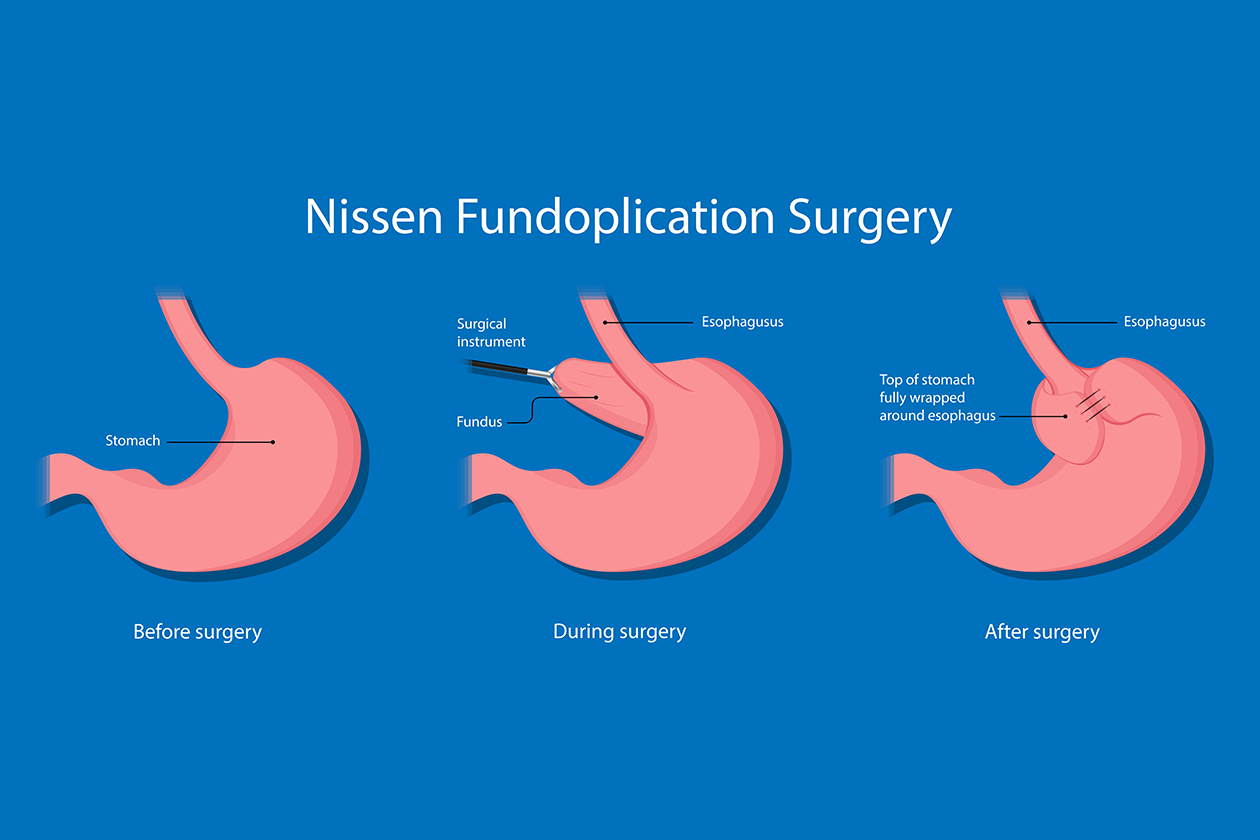
- Nissen 360-degree wrap: As the name suggests, this technique is characterized by a complete wrap of the fundus portion of the stomach around the esophagus, restricting the space for vomiting or burping, which may worsen the condition.
Working Mechanism
Nissen fundoplication works on the principle of strengthening the esophageal sphincter to prevent the backward flow that causes heartburn. This is initiated by providing anesthesia to the patient, followed by making several small cuts through the skin and peritoneum, a tissue layer around the gut. Next, a thin, cylindrical, and lighted tube carrying a mounted camera is inserted through the cuts. Surgeons carefully wrap the fundus portion of the stomach around the esophagus, depending on the patient’s condition, and attach the two with dissolvable stitches. Surgeons make sure to vent out any remaining gas in the abdomen and retract all the tools carefully. Finally, dissolvable stitches are used to close external cuts. The steps involved in the Nissen fundoplication procedure vary depending on the variations in the technique.
Final Word
Nissen fundoplication is a minimally invasive and effective bariatric procedure to treat GERD. It requires the utmost precision when maneuvering tools to wrap the fundus. This calls for an experienced bariatric doctor that leverages years of expertise to help patients get relief from GERD. When considering reflux surgery in Dallas, look no further than DFW Bariatrics and General Surgery. Our team of highly skilled and experienced doctors provides 360-degree bariatric solutions and will assess your condition to chart the best way forward. To discuss your requirements or book an appointment, call 469-620-0222 or email us at [email protected]. Alternatively, you can fill out our contact form, and we’ll get in touch with you at the earliest.
Frequently Asked Questions
What Is Fundoplication Surgery, and How Does It Treat GERD?
Fundoplication is an antireflux surgery in which the upper part of the stomach is wrapped around the lower esophagus to strengthen the barrier against stomach acid flowing backward. It may be considered for people with persistent gastroesophageal reflux disease (GERD), depending on their symptoms, test results, and response to other treatments.
Who Is a Good Candidate for Fundoplication Surgery?
Fundoplication may be an option for people with ongoing GERD symptoms despite appropriate medical treatment or for selected patients who prefer a surgical approach after discussing the benefits and risks. A surgeon may recommend tests such as an upper endoscopy, reflux monitoring, or esophageal manometry to assess whether surgery is appropriate. Eligibility depends on an individual medical evaluation.
What Is the Difference Between Nissen and Toupet Fundoplication?
Nissen fundoplication involves wrapping the upper stomach completely around the lower esophagus, while Toupet fundoplication uses a partial wrap, typically around 270 degrees. The choice depends on factors such as esophageal function, anatomy, symptoms, and the surgeon’s assessment. Neither technique is the best option for every patient.
How Long Does It Take to Recover From Fundoplication Surgery?
Recovery varies depending on the surgical technique, overall health, and individual healing. After laparoscopic surgery, some patients return to many normal activities within a few weeks, although full recovery may take longer. Patients generally need to follow their surgical team’s instructions about diet, activity, and follow-up appointments.
What Are the Potential Risks and Side Effects of Fundoplication Surgery?
Potential side effects include temporary difficulty swallowing, bloating, increased gas, and difficulty burping or vomiting. Less common complications can include injury to nearby organs, persistent reflux symptoms, or problems with the surgical wrap. Patients should discuss their individual risk factors, expected benefits, and alternatives with their surgeon before deciding on surgery.
What Can You Eat After Fundoplication Surgery?
Patients commonly progress from liquids to soft foods and then gradually return to a broader diet according to their surgeon’s instructions. Small meals, eating slowly, and chewing food thoroughly may help during recovery. The recommended diet and timeline vary, so patients should follow their own postoperative plan and report persistent difficulty swallowing or inability to keep fluids down to their healthcare team.