
Orbera Gastric Balloon Dallas
- Home
- Non Surgical Medical Weight Loss
- Orbera Fluid Filled Gastric Balloon
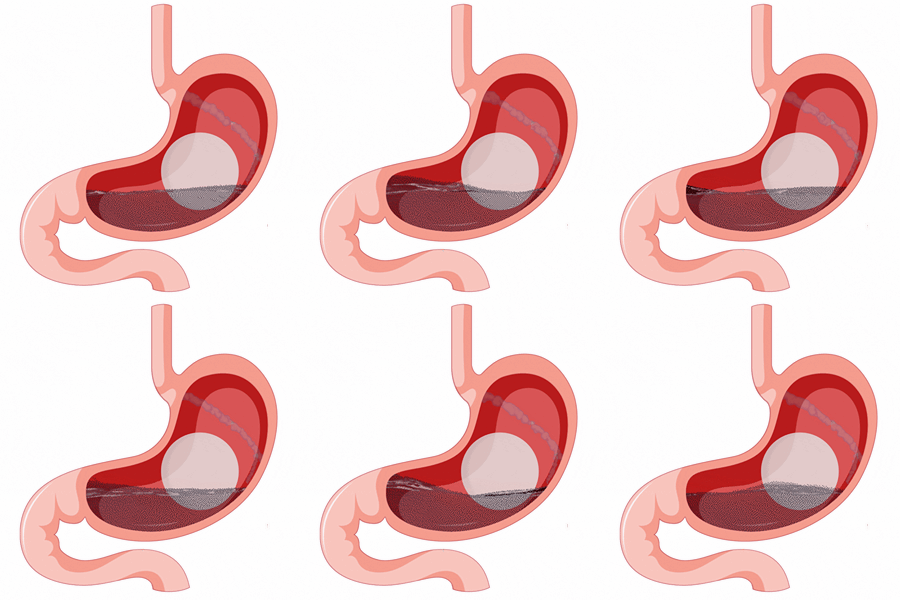
What is an Orbera Gastric Balloon?
The Orbera Gastric Balloon is a non-surgical outpatient procedure recommended for individuals who are unable to lose weight with diet and exercise alone and have a body mass index (BMI) between 30 and 40. During the procedure, a fluid-filled balloon is inserted through the mouth, down the esophagus, and into the stomach. Once in place, the balloon occupies space in the stomach, which limits food intake and helps you feel full sooner. The procedure is temporary, and the balloon is typically removed after six months.
With the support of the Orbera gastric balloon, patients can generally achieve 3–4 times more weight loss than with diet and exercise alone. In addition to physical weight loss, the procedure may promote metabolic improvements, including better blood sugar control and reduced cholesterol levels, while also boosting energy, confidence, and overall quality of life.
Candidates for Orbera Gastric Balloon
- Adults over 18 years
- Body Mass Index (BMI) is 30 – 40 kg/m2
- No prior Bariatric Surgery or Bowel/Stomach Problems
- Willing to participate in a medically supervised program
- Not comfortable with other forms of weight loss surgery
- Tried and failed at diet and exercise
- Ready to commit to a lifestyle change
- Ready to undergo balloon removal after six months
- Do not have a complicated medical history such as acid reflux, severe hernias, or stomach ulcers
If you think you are right for Orbera Gastric Balloon and want to reduce 30 plus pounds, speak with an expert at DFW Bariatrics and General Surgery in Dallas, Fort Worth, Mansfield & Plano to evaluate the benefits and possible risks.
Orbera Gastric Balloon Contradictions
Orbera Gastric Balloon is not a good option for:
- People who are unable to undergo endoscopy due to some medical reasons.
- Individuals who had undergone any gastrointestinal surgery.
- Individuals with an inflammatory disease of the gastrointestinal tract or other congenital anomalies.
- People with a large hiatal hernia or other structural abnormality in the esophagus or larynx.
- Women who are pregnant or planning to conceive within the next six months.
- Procedure
- Post-Op Care
- Risks & Complications
The placement of Orbera Gastric Balloon into the stomach is a simple, non-surgical outpatient procedure. First, a diagnostic test is done to make sure it is safe to perform the procedure. Then the deflated gastric balloon is inserted through the esophagus and into the stomach. Once it is in position, the balloon is inflated with saline and a dye, to maintain the required size. The procedure takes about 15 minutes to complete. The balloon is temporarily left in the stomach for about 6 months.
After the procedure, you may experience some cramps and nausea, as your stomach adjusts. Your throat may feel a little sore. You’ll follow a liquid or soft diet for a few weeks and followed by 6 months of a supervised diet plan. Our team will continue working closely with you during these 6 months.
As with any other procedure, Gastric balloon procedure involves certain risks and complications:
- Esophageal, gastric ulcers or perforation.
- Deflation of the balloon which can lead to blockage.
- Rupture of balloon dye (if used), which will be released in the urine.
Procedure
The placement of the Orbera Gastric Balloon is a simple, non-surgical outpatient procedure performed under mild sedation. First, a diagnostic test ensures the procedure is safe. Then, the deflated balloon is carefully inserted through the esophagus into the stomach and inflated with saline and a dye to achieve the required size. Because it does not involve surgery, patients can typically return home the same day.
Post-Op Care
After the Orbera Gastric Balloon procedure, you may experience mild cramps, nausea, or a sore throat as your stomach adjusts. To support healing, you will begin with a liquid or soft diet, gradually transitioning into a six-month medically supervised diet and lifestyle program. During this period, our team works closely with you to track progress, provide motivation, and make any necessary adjustments.
Risks & Complications
As with any other procedure, Gastric balloon procedure involves certain risks and complications:
- Esophageal, gastric ulcers or perforation.
- Deflation of the balloon which can lead to blockage.
- Rupture of balloon dye (if used), which will be released in the urine.



Want to Lose Weight?
Contact DFW Bariatrics and General Surgery!
If you are planning to lose weight and adopt a healthier lifestyle, the experts at DFW Bariatrics and General Surgery, serving Dallas, Fort Worth, Mansfield, and Plano, can help. Our weight loss physicians take the time to identify the underlying causes of your weight gain and provide comprehensive support at every stage of your journey. For more information about the Orbera Gastric Balloon procedure in the Dallas–Fort Worth area, call 469-620-0222 or email [email protected].