

May 11, 2026
Bariatric surgery has become an important option for people living with obesity when diet, exercise, and medical weight loss efforts have not delivered sustainable results. It is not simply about reducing numbers on the scale; modern weight loss surgery is designed to support long-term health by improving how the body regulates appetite, metabolism, and obesity-related conditions.
In the Dallas-Fort Worth (DFW) region, bariatric programmes now offer a range of minimally invasive procedures, along with structured pre-surgery evaluation and long-term follow-up. If you’re exploring bariatric surgery in Dallas TX or Fort Worth, it helps to understand the different surgical options available, how they work, and how doctors determine which approach is most suitable for your health goals and medical needs.
Understanding Bariatric Surgery
Bariatric surgery, also known as weight loss surgery, includes a group of surgical procedures that help people achieve and maintain significant weight reduction by changing how the digestive system functions. These procedures are clinically proven to support sustained weight loss and improve obesity-related health conditions when combined with long-term lifestyle changes and medical follow-up.
Depending on the procedure, bariatric surgery may work by:
- Reducing stomach size, which limits food intake and promotes early satiety
- Altering digestion and absorption, leading to changes in calorie uptake
- Influencing gut hormones, which helps regulate hunger, blood sugar levels, and metabolism
Unlike short-term weight loss methods, bariatric surgery is considered a metabolic intervention. For many patients in the Dallas-Fort Worth area, it plays a key role in improving conditions such as type 2 diabetes, high blood pressure, sleep apnea, and joint-related mobility issues, while supporting overall long-term health outcomes.
Who May Benefit from Bariatric Weight Loss Surgery
Bariatric weight loss surgery is usually considered for people who have not achieved sustainable results with diet, exercise, or medical weight loss alone. It forms part of a structured, medically supervised approach to managing obesity and related health risks.
Bariatric surgery may be recommended for individuals who:
- Have obesity that significantly affects overall health or daily functioning
- Are living with obesity-related conditions such as type 2 diabetes, high blood pressure, sleep apnea, or joint pain
- Experience reduced mobility, fatigue, or limitations in physical activity due to excess weight
- Have made repeated, unsuccessful attempts at long-term weight loss through non-surgical methods
- Are medically fit for surgery and prepared for long-term lifestyle and dietary changes
Eligibility is determined through a comprehensive evaluation rather than a single criterion. This assessment typically includes medical history, existing health conditions, previous weight loss efforts, and readiness to commit to ongoing follow-up care, helping ensure that bariatric surgery is both appropriate and beneficial.
Types of Bariatric Surgery Available in Dallas-Fort Worth
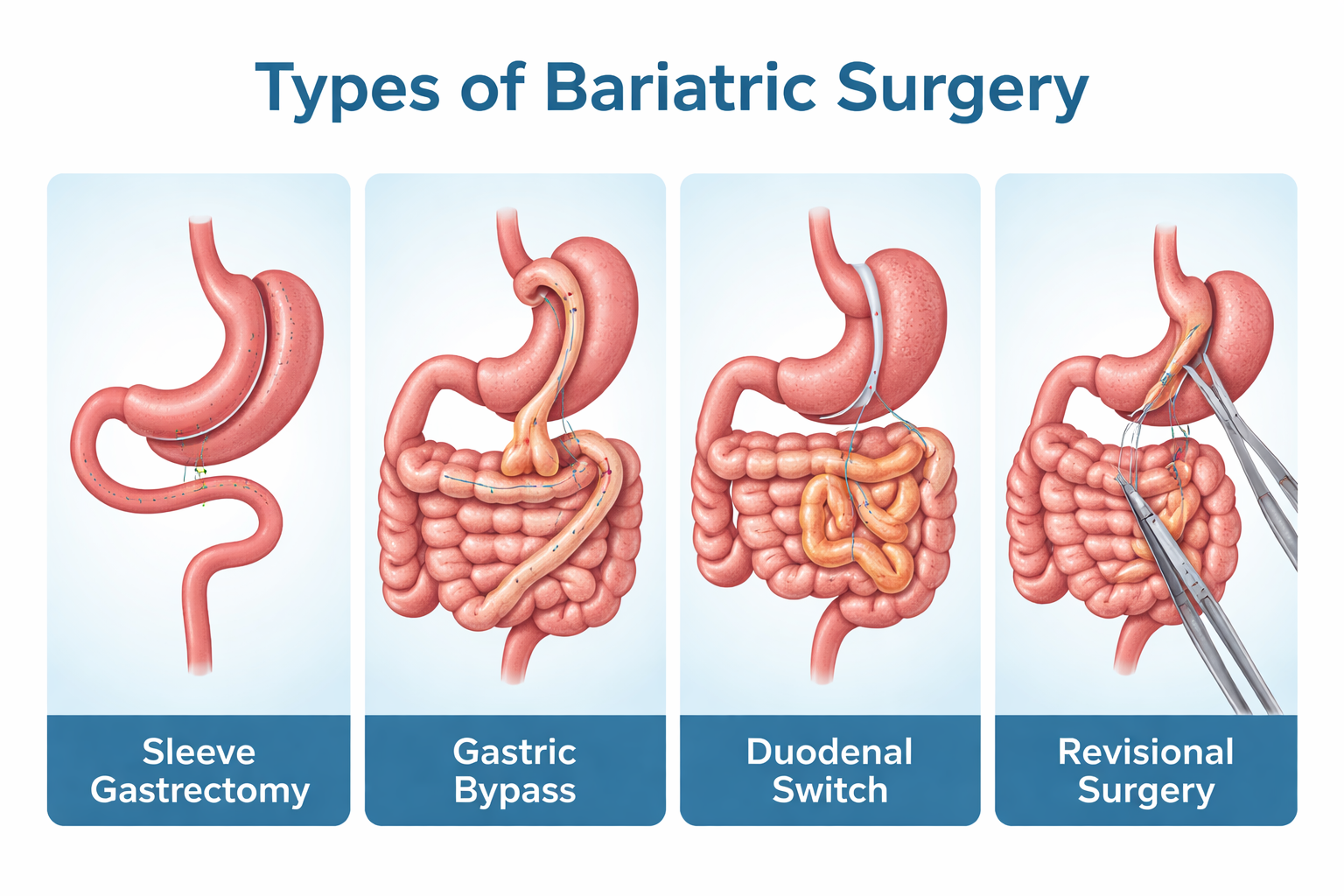
Bariatric surgery is not a single procedure. Several surgical options are available, each designed to support weight loss and metabolic improvement in different ways. The choice of procedure depends on factors such as body weight, existing medical conditions, previous surgeries, and long-term health goals. Below are the commonly performed bariatric surgery options in the Dallas–Fort Worth region:
Sleeve Gastrectomy
Sleeve gastrectomy is one of the most commonly performed bariatric procedures. It involves removing a portion of the stomach to create a smaller, sleeve-shaped stomach.
- The surgery helps limit food intake and promotes early fullness
- Influences hunger-related hormones, reducing appetite
- Does not involve intestinal rerouting
- Often recommended for patients seeking effective weight loss with a relatively straightforward procedure
Gastric Bypass (Roux-en-Y and One Anastomosis)
Gastric bypass surgery reduces stomach size and alters the digestive pathway to limit calorie absorption and improve metabolism.
- The surgery supports significant and sustained weight loss
- Known for strong metabolic benefits, particularly for type 2 diabetes
- Involves rerouting part of the small intestine
- May be recommended for patients with severe obesity or multiple obesity-related conditions
Duodenal Switch Procedures
Duodenal switch procedures combine stomach reduction with intestinal bypass to support significant weight loss and metabolic improvement. Several variations exist, and the choice depends on weight loss goals, metabolic needs, and long-term follow-up requirements. Types of duodenal switch procedures include:
Biliopancreatic Diversion with Duodenal Switch (BPD-DS)
- Traditional duodenal switch procedure
- Offers powerful and sustained weight loss
- Requires lifelong nutritional monitoring
Single Anastomosis Duodenoileal Bypass (SADI)
- A simplified variation of the duodenal switch
- Uses a single intestinal connection, reducing surgical complexity
- Often considered for patients with severe obesity or metabolic disease
Single Intestinal Pylorus Sparing Duodenal Switch (SIPS)
- Preserves normal stomach emptying while providing metabolic benefits
- Designed to balance effective weight loss with nutritional safety
- Requires long-term follow-up and dietary compliance
Revisional Bariatric Surgery
Revisional bariatric surgery is performed when a previous weight loss surgery has not delivered expected results or has caused complications.
- May address inadequate weight loss or weight regain
- Can help manage issues related to earlier bariatric procedures
- Requires detailed evaluation and advanced surgical expertise
- Treatment plans are highly individualised
Each of these procedures serves a distinct purpose, and no single option is right for everyone. Careful evaluation and personalised treatment planning help ensure the chosen surgery aligns with a patient’s health needs and long-term goals.
Robotic Technology in Modern Bariatric Surgery
Advances in surgical technology have played a significant role in improving the safety, precision, and outcomes of bariatric procedures. In many Dallas-Fort Worth centres, such as DFW Bariatric & General Surgery, many bariatric surgeries are performed using robotic-assisted systems as part of a minimally invasive approach.
Robotic technology does not change the type of bariatric procedure being performed. Instead, it enhances how the surgery is carried out by providing surgeons with greater control, improved visual clarity, and enhanced precision during complex operations, supporting safer surgery and more consistent outcomes when used in appropriate cases.
Key advantages of robotic-assisted bariatric surgery may include:
- Enhanced precision and range of motion during delicate surgical steps
- Improved visualisation with high-definition, magnified views of the surgical field
- Greater accuracy when operating in patients with complex anatomy or prior surgeries
- Smaller incisions, which may support reduced post-operative discomfort and recovery time
Robotic assistance is commonly used for procedures such as sleeve gastrectomy, gastric bypass, duodenal switch variants, and revisional bariatric surgery, depending on individual patient needs and surgical complexity. The decision to use robotic technology is based on clinical judgement, procedural requirements, and patient safety considerations.
Expected Health Benefits Beyond Weight Loss
While weight reduction is a key outcome of bariatric surgery, many patients experience broader health improvements that extend well beyond changes on the scale. By altering digestion and influencing metabolic pathways, bariatric procedures can help address several obesity-related conditions that affect long-term health and quality of life.
Common health benefits associated with bariatric surgery may include:
- Improved blood sugar control, with some patients experiencing significant improvement or remission of type 2 diabetes
- Better management of high blood pressure and cholesterol, reducing cardiovascular risk
- Reduction in sleep apnea severity, leading to improved sleep quality and daytime energy
- Decreased joint pain and improved mobility, making physical activity easier and more sustainable
- Enhanced overall wellbeing, including increased stamina, confidence, and daily functioning
These benefits typically develop gradually as weight loss progresses and lifestyle changes are maintained. Long-term success depends on regular follow-up, nutritional guidance, and adherence to recommended dietary and activity plans.
What to Expect Before and After Bariatric Surgery
Preparing for bariatric surgery involves more than scheduling an operation. A structured process before and after surgery helps ensure safety, supports recovery, and promotes long-term success.
Pre-Surgery Evaluation
Before bariatric surgery, patients undergo a comprehensive assessment to determine suitability and plan care effectively. This evaluation typically includes:
- Review of medical history and existing health conditions
- Nutritional assessment and dietary counselling
- Psychological screening to assess readiness for long-term lifestyle changes
- Diagnostic tests and imaging, as required
This preparation phase helps set realistic expectations and ensures that patients are well-informed before moving forward.
Recovery and Long-Term Lifestyle Changes
After surgery, recovery timelines vary depending on the procedure performed and individual health factors. Most patients begin with a gradual return to daily activities, supported by medical guidance and follow-up care.
Key aspects of post-surgery care include:
- A staged diet plan to support healing and nutritional needs
- Gradual reintroduction of physical activity
- Ongoing nutritional supplementation, when required
- Regular follow-up visits to monitor progress and address concerns
Bariatric surgery is a long-term commitment rather than a one-time solution. Sustained results depend on consistent lifestyle changes, medical monitoring, and active participation in follow-up care.
Choosing the Right Bariatric Surgery Option
Selecting the most appropriate bariatric surgery is a highly individual decision. There is no single procedure that suits everyone, as each option differs in complexity, expected outcomes, and long-term requirements. The goal is to choose a surgical approach that aligns with a patient’s health status, weight loss needs, and ability to maintain long-term lifestyle changes.
Doctors consider several factors when recommending a bariatric procedure, including:
- Degree of obesity and weight loss goals
- Presence of obesity-related conditions such as diabetes or sleep apnea
- Previous abdominal or bariatric surgeries
- Nutritional considerations and long-term follow-up needs
- Overall medical fitness and readiness for surgery
An informed discussion between the patient and the surgical team is essential. Understanding the benefits, limitations, and commitments associated with each option helps patients make confident decisions about their care. Personalised treatment planning plays a key role in achieving safe, sustainable outcomes with bariatric surgery.
Also Read: 4 Benefits of Undergoing Bariatric Surgery
Final Takeaway
Bariatric surgery is a powerful tool for long-term weight management, but successful outcomes depend on choosing the right approach for each individual. Understanding the available surgical options, the role of modern techniques, and the long-term commitment involved helps patients make informed decisions about their health.
For individuals across North Texas, DFW Bariatric & General Surgery provides physician-led evaluation and personalised treatment planning for both surgical and non-surgical weight loss options. Patients exploring weight loss surgery or medical weight loss programmes in Dallas, Fort Worth, Mansfield, Plano, and nearby Texas communities can schedule a consultation at their preferred location to discuss care tailored to their needs.
Take the next step towards sustainable long-term health, simply call 469-620-0222, email [email protected], schedule a consultation online, or fill out the contact form to learn more about personalised weight loss options.
Frequently Asked Questions
Q: How do I know which bariatric surgery option is right for me?
Choosing the right bariatric surgery depends on several factors, including your current weight, existing health conditions, previous abdominal surgeries, and long-term weight loss goals. A physician-led evaluation helps determine which procedure offers the safest and most effective outcome for your individual needs rather than relying on a standard recommendation.
Q: Is bariatric surgery available near me in the Dallas–Fort Worth area?
Yes, bariatric surgery is widely available across the Dallas–Fort Worth region, including Dallas, Fort Worth, Mansfield, Plano, and nearby areas in North Texas. At DFW Bariatric & General Surgery, patients can consult experienced bariatric surgeons to explore personalised surgical and non-surgical weight loss options based on their individual health needs.
Q: What is the difference between laparoscopic and robotic bariatric surgery?
Both laparoscopic and robotic approaches are minimally invasive. Robotic-assisted bariatric surgery uses advanced technology to enhance surgical precision and visualisation during complex procedures. The choice of approach depends on the procedure type, patient anatomy, and surgeon expertise, rather than patient preference alone.
Q: Can bariatric surgery help improve conditions like diabetes or sleep apnea?
Yes, bariatric surgery is known to support improvement in several obesity-related conditions, including type 2 diabetes, high blood pressure, and sleep apnea. Many patients experience better metabolic control and overall health as weight loss progresses, alongside ongoing medical care and lifestyle changes.
Q: What happens if I regain weight after bariatric surgery?
Weight regain can occur for various reasons, including metabolic changes, lifestyle factors, or issues related to a previous procedure. In such cases, doctors may recommend nutritional support, medical weight loss strategies, or revisional bariatric surgery after a thorough evaluation.
Q: How long does it take to return to normal activities after bariatric surgery?
Recovery timelines vary depending on the type of bariatric surgery and individual health factors. Most patients gradually resume daily activities within a few weeks, following medical guidance. Long-term success relies on adherence to dietary recommendations, physical activity, and follow-up care.